Mesoporous materials
Introducing pores a few nanometers in size into a solid changes its refractive index, thermal conductivity, heat capacity, and mechanical strength. Consequently, mesoporous materials—featuring pores between 2 and 50 nm—are widely used as optical coatings, low-k dielectrics, and thermal insulation. However, these properties depend on the size, shape, and arrangement of the pores, as well as the nanoscale structure of the solid framework.
Since 2006, our team has combined simulations and experiments to understand how nanoscale architecture determines these optical and thermal properties. We use this insight to design transparent, thermally insulating materials for energy efficient windows. Much of this work was done in close collaboration with Profs. Sarah Tolbert, Bruce Dunn, and Yongjie Hu at UCLA.
Transparent and thermally insulating mesoporous silica for windows
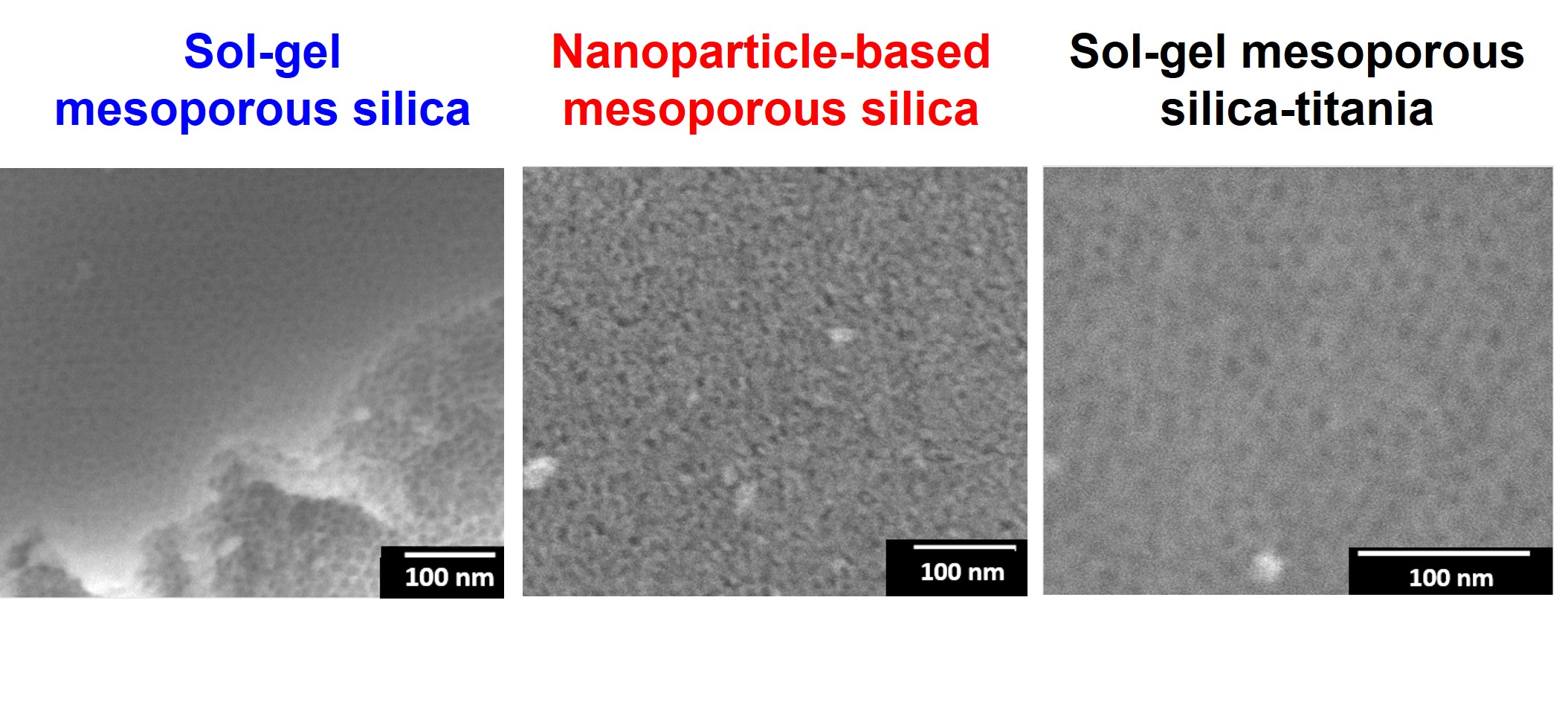
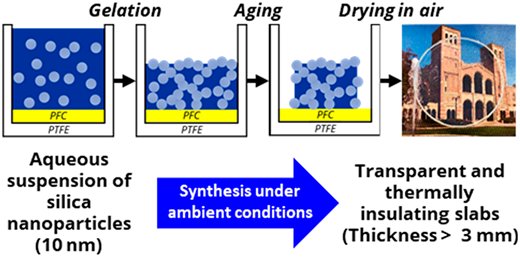
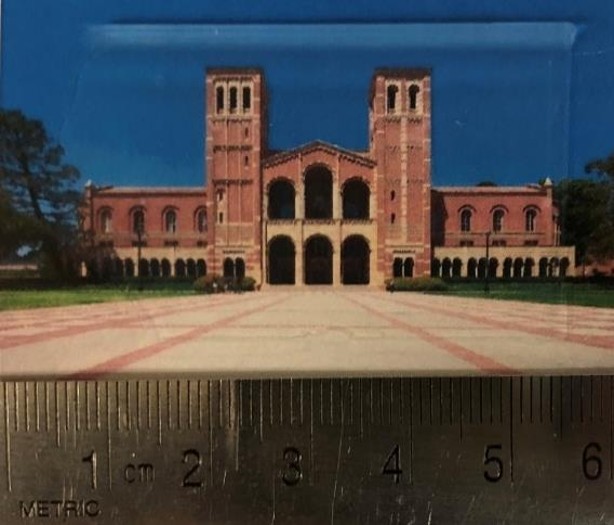
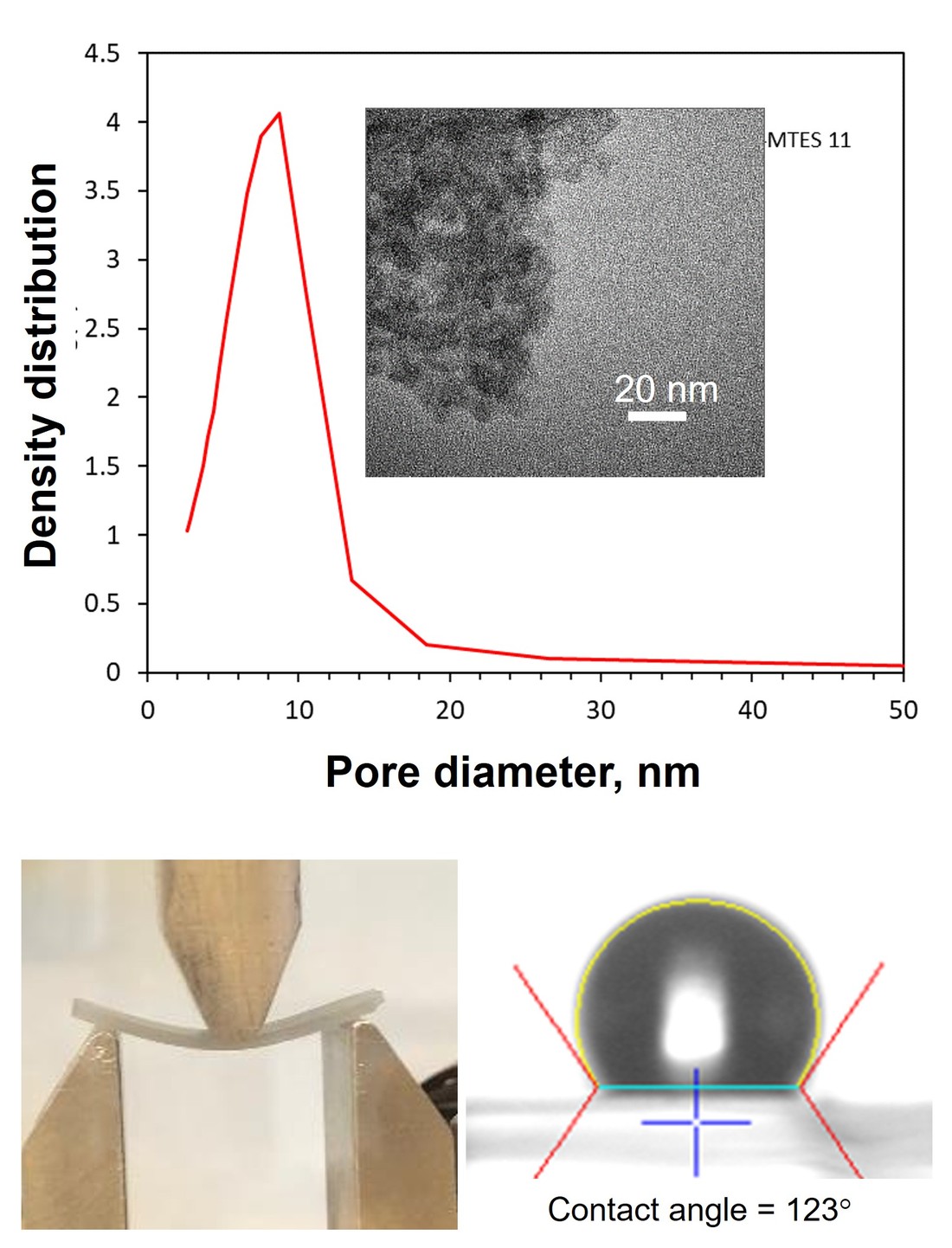
Single-pane windows account for a large share of heat loss in existing buildings. As part of the ARPA-E SHIELD program (2017–2022), our team developed mesoporous silica slabs that are both highly transparent and thermally insulating. The thermal conductivity of transparent materials (e.g., glass) can be reduced by introducing porosity. However, this reduction is typically accompanied by the presence of large pores (> 30 nm) which tend to scatter visible light and render the material opaque or translucent instead of transparent. In addition, thick mesoporous slabs provide superior thermal insulation. However, they are prone to cracking during synthesis. Here, we synthesized millimeter-thick transparent mesoporous silica slabs from preformed nanoparticles [1,2] and ambiently-dried silica aerogel slabs [3] on omniphobic substrates. These slabs are also flexible and hydrophobic. We then comprehensively characterized their optical, thermal, and mechanical properties [4]. To understand what limits their transparency and causes cracking, we utilized small-angle X-ray scattering (SAXS) to examine nanoparticle aggregation and the drying process [5].
- [1]M. Marszewski, S.C. King, Y. Yan, T. Galy, M. Li, A. Dashti, D.M. Butts, J.S. Kang, P.E. McNeil, E. Lan, B. S. Dunn, Y. Hu, S. H. Tolbert, L. Pilon, Thick Transparent Nanoparticle-Based Mesoporous Silica Monolithic Slabs for Thermally Insulating Window Materials, ACS Applied Nano Materials, Vol. 2, No.7, pp. 4547-4555 (2019).DOIPDF
- [2]M. Marszewski, S.C. King, T. Galy, G.N. Kashanchi, A. Dashti, Y. Yan, M. Li, D.M. Butts, P.E. McNeil, E. Lan, B. Dunn, Y. Hu, S.H. Tolbert, L. Pilon, Transparent Silica Aerogel Slabs Synthesized from Nanoparticle Colloidal Suspensions at Near Ambient Conditions on Omniphobic Liquid Substrates, Journal of Colloids and Interface Sciences, Vol. 606, No. 1, pp. 884-897 (2022).DOIPDF
- [3]D.M. Butts, P.E. McNeil, M. Marszewski, E. Lan, T. Galy, M. Li, J.S. Kang, D. Ashby, S. King, S.H. Tolbert, Y. Hu, L. Pilon, B.S. Dunn, Engineering Mesoporous Silica for Superior Optical and Thermal Properties, MRS Energy & Sustainability, Vol. 7, E39 (2020).DOIPDF
- [4]M. Marszewski, A. Dashti, P.E. McNeil, M. Fox, V. Wall, D.M. Butts, S.C. King, G.N. Kashanchi, S.H. Tolbert, B. S. Dunn, L. Pilon, Elastic and Plastic Mechanical Properties of Nanoparticle-Based Silica Aerogels and Xerogels, Mesoporous Microporous Materials, Vol. 330, 111569 (2022).DOIPDF
- [5]G. N. Kashanchi, S. King, S. E. Ju, A. Dashti, R. Martinez, Y.-.K. Lin, V. Wall, P. E. McNeil, M. Marszewski, L. Pilon, S. H. Tolbert, Using Small Angle X-ray Scattering to Examine the Aggregation Mechanism in Silica Nanoparticle-Based Ambigels for Improved Optical Clarity, The Journal of Chemical Physics, Vol. 158, 034702 (2023).DOIPDF
Radiative cooling materials
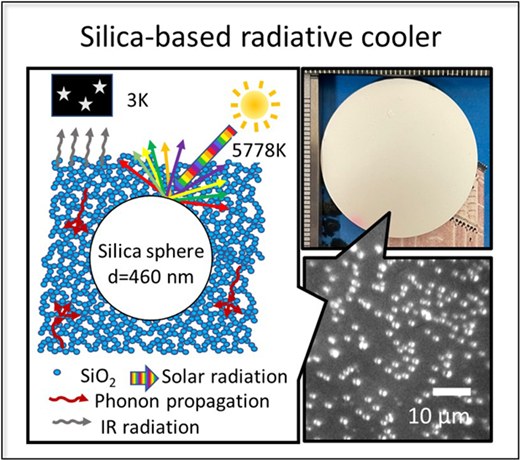
Under clear skies, the Earth’s atmosphere is largely transparent to infrared radiation with wavelengths between 8 and 13 μm. Thus, a surface that emits strongly in this spectral range can radiate heat directly to outer space and cool below the ambient air temperature without any energy input. Achieving this passive radiative cooling during the day is more challenging, because the surface must also reflect the incident sunlight while minimizing heat gain from its warmer surroundings. Building on our transparent and insulating mesoporous silica, we developed a thermally insulating passive daytime radiative cooler made of hierarchical silica aerogels that back-scatters sunlight, emits strongly in the atmospheric transparency window, and limits parasitic heat gain [6]. We also designed mesoporous organosilica infrared metamaterials for the radiative cooling of windows, which must remain transparent to visible light [7].
- [6]S. E. Ju, R. Martinez, G. N. Kashanchi, A. Bhanawat, R. A. Yalçin, J. Drévillon, L. Pilon, S. H. Tolbert, Development of a Thermally Insulating Passive Daytime Radiative Cooler Using Hierarchical Silica Aerogels, ACS Applied Energy Materials, Vol. 9, No. 14, pp. 9209-9222 (2026).DOIPDF
- [7]A. Zaveri, S. E. Ju, A. Tuokkola, R. McAlpine, R. Martinez, J. Kim, S. Furuya, L. Pilon, B. Dunn, S. H. Tolbert, A. P. Raman, Mesoporous Organosilica-Based Infrared Metamaterials for Radiative Cooling of Windows, Small, e75152 (2026).DOIPDF
Understanding and controlling thermal properties of mesoporous materials
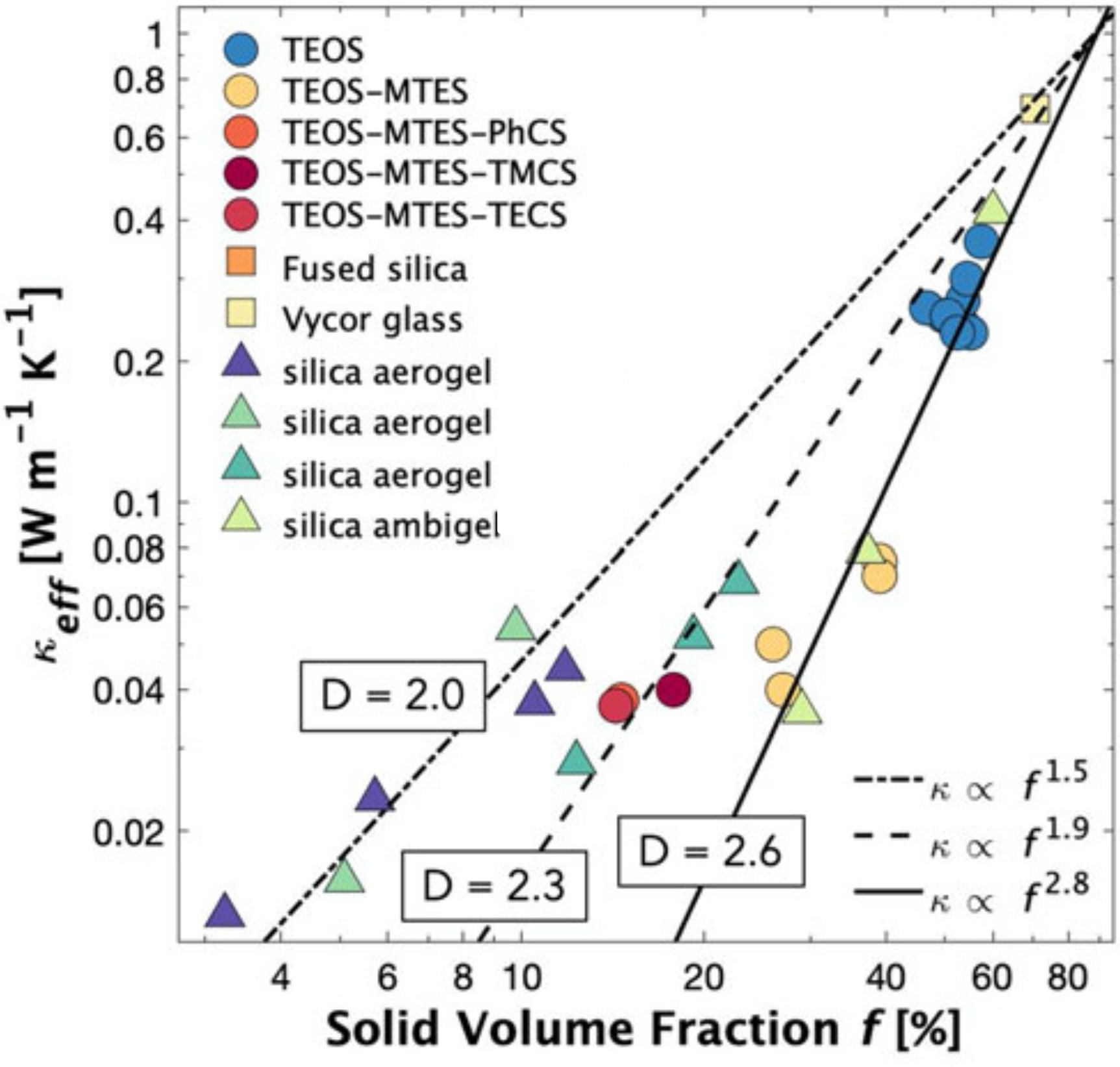
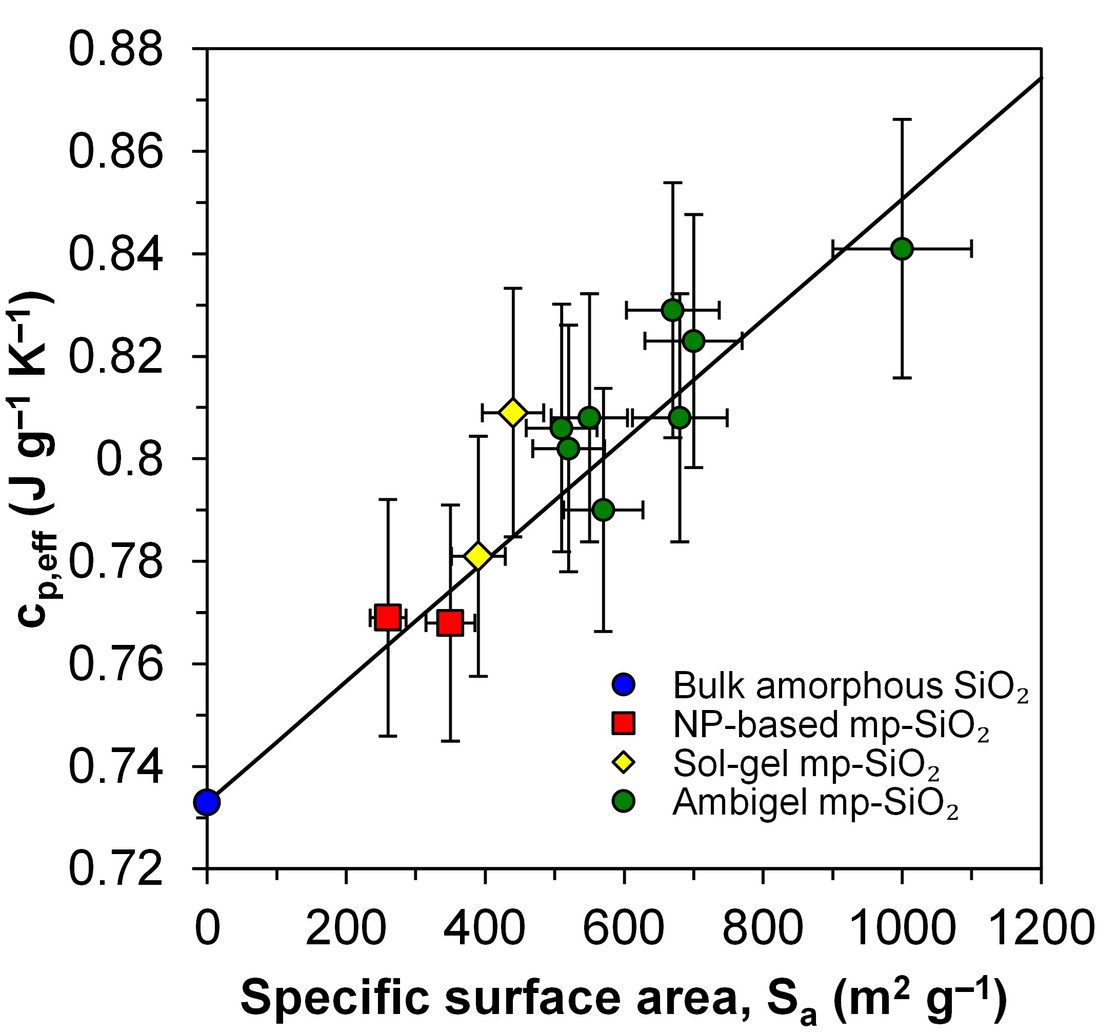
The various mesoporous materials synthesized in our lab feature porosities ranging from 50% to 90% with a narrow pore size distribution below 20 nm, resulting in very low thermal conductivity. Classical effective medium approximations assume that the effective thermal conductivity of porous media depends only on their porosity and the thermal conductivity of the constituent solid and gas phases [8]. Interestingly, our research revealed that not only porosity but also pore size and fractal dimension significantly affect the thermal conductivity of mesoporous silica [3]. We also observed a weak effect of nanoparticle size on the thermal conductivity of nanoparticle-based materials [9]. In addition, we demonstrated that surface hydroxyl groups on the large internal surface area increase the heat capacity of mesoporous silica [10]. Finally, we performed molecular dynamics simulations of amorphous nanoporous silica and crystalline nanoporous silicon to gain atomistic insights and derive scaling laws relating thermal conductivity to porosity and pore size [11, 12].
- [8]T. Coquil, E. Richman, N. Hutchinson, S. Tolbert, and L. Pilon, Thermal Conductivity of Cubic and Hexagonal Mesoporous Silica Thin Films, Journal of Applied Physics, Vol. 106, no.3, 034910. Selected to appear in Virtual Journal of Nanoscale Science & Technology, Vol. 20, no.8, August 24, 2009 (2009).DOIPDFExplainer
- [9]V. Wall, S.C. King, G.N. Kashanchi, S. Li, M. Li, T. Galy, D.H. Harry, S. Ju, M. Marszewski, L. Pilon, Y. Hu, S. H. Tolbert, Understanding the Effect of Nanoparticle Size on Thermal Conductivity in Amorphous Nanoporous Materials Made From Colloidal Building Blocks, The Journal of Physical Chemistry C, Vol. 126, pp. 18029-18035 (2022).DOIPDF
- [10]M. Marszewski, D. Butts, E. Lan, Y. Yan, S. King, P. E. McNeil, T. Galy, B. Dunn, S. H. Tolbert, Y. Hu, L. Pilon, Effect of Surface Hydroxyl Groups on Heat Capacity of Mesoporous Silica, Applied Physics Letters, Vol.112, No. 20, 201903 (2018).DOIPDF
- [11]T. Coquil, J. Fang, and L. Pilon, Molecular Dynamics Study of the Thermal Conductivity of Amorphous Nanoporous Silica, International Journal of Heat and Mass Transfer, Vol. 54, pp. 4540-4548 (2011).DOIPDFExplainer
- [12]J. Fang and L. Pilon, Scaling Laws for Thermal Conductivity of Crystalline Nanoporous Silicon Based on Molecular Dynamics Simulations, Journal of Applied Physics, Vol. 110, 064305 (2011).DOIPDFExplainer
Predicting and measuring the optical properties of nanoporous thin films
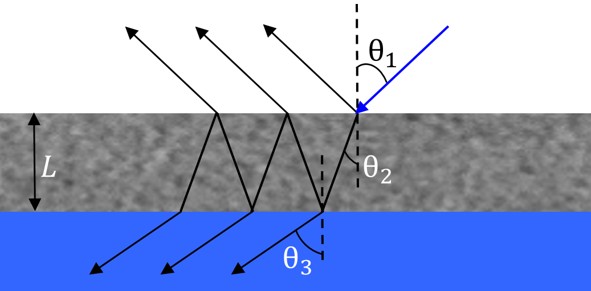
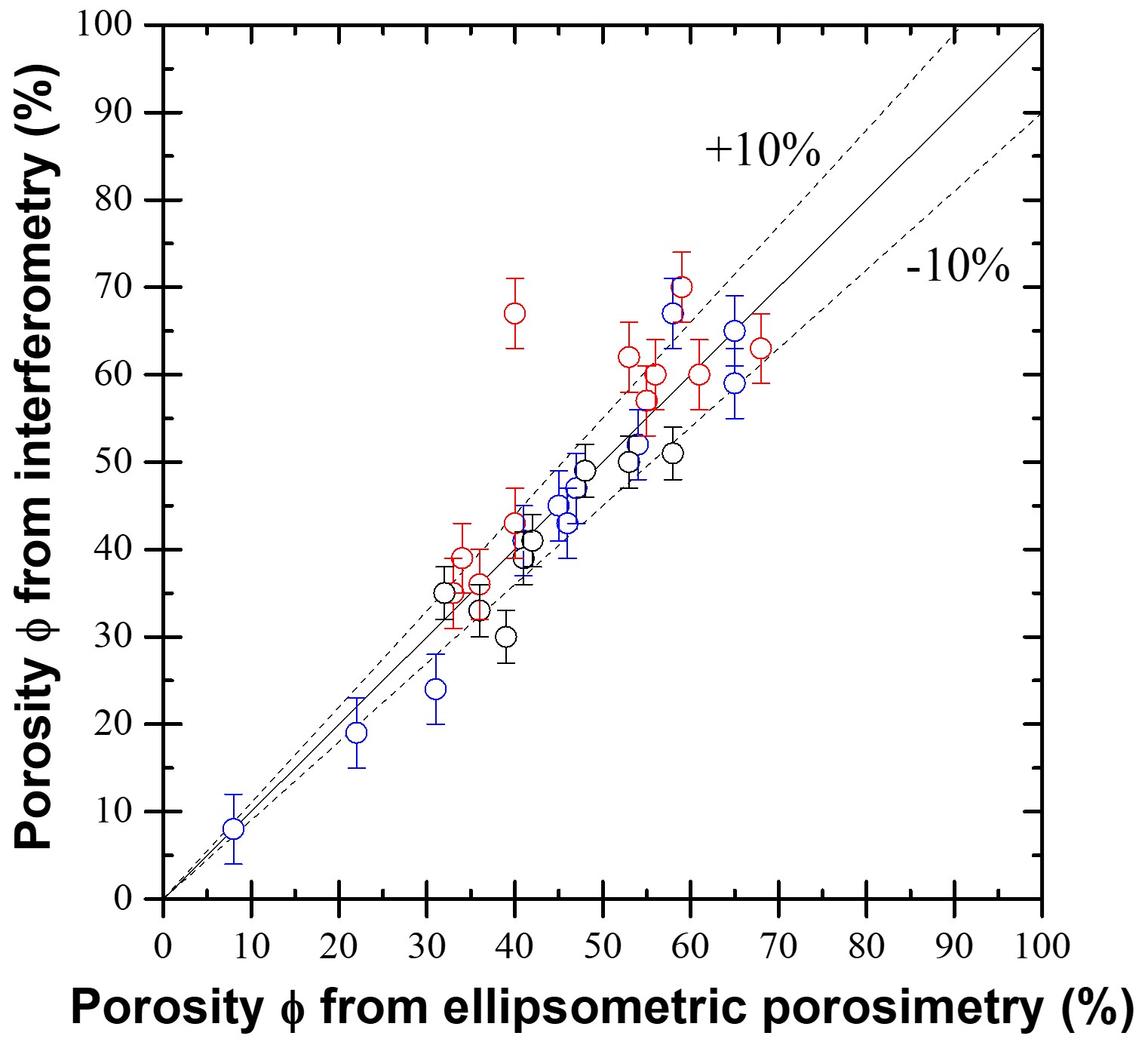
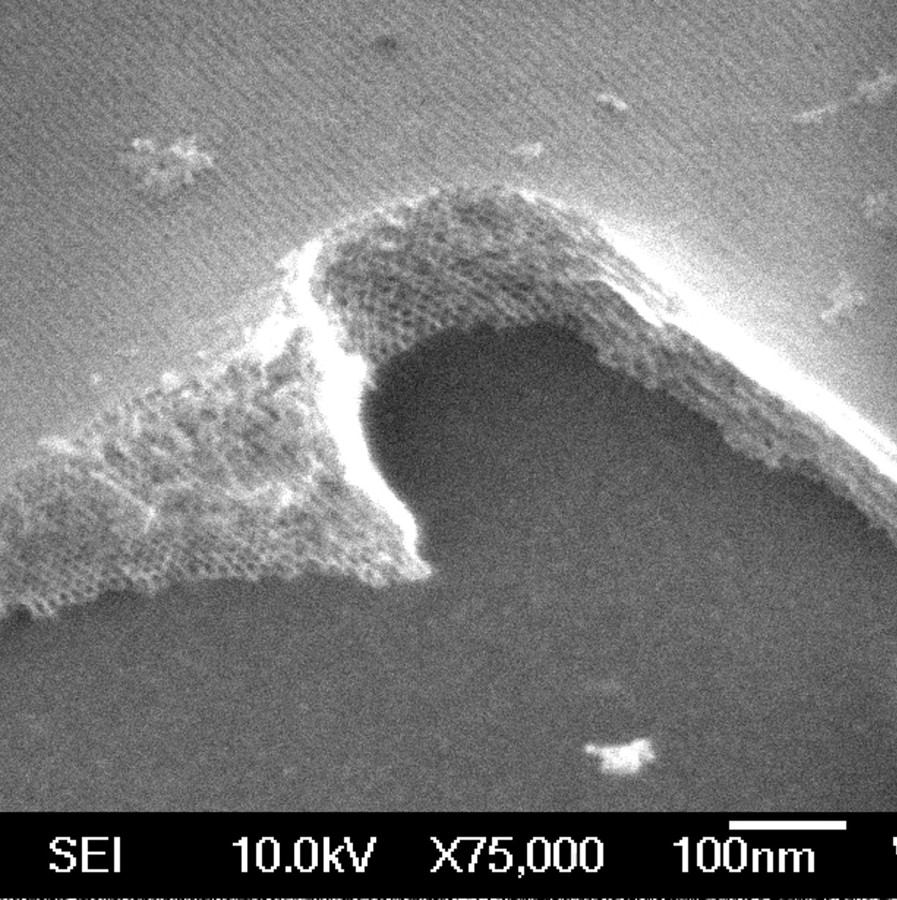
The optical properties of nanocomposite and mesoporous thin films are commonly predicted using different effective medium approximations whose validity has not always been established [13, 14]. To address this, our team solved Maxwell’s equations directly in thin films with realistic morphologies and thicknesses to rigorously test these approximations. We identified precisely when such films behave as homogeneous effective media, how pore shape, arrangement, and light polarization affect their optical properties [15, 16], and which models yield accurate predictions for both non-absorbing and absorbing films [13, 14]. We also validated these computational predictions through direct measurements on surfactant-templated mesoporous silica films [17]. Finally, we developed practical methods to retrieve the thickness, refractive index, and porosity of mesoporous thin films directly from spectral reflectance measurements [18].
- [13]M. M. Braun and L. Pilon, Effective Optical Properties of Non-Absorbing Nanoporous Thin Films, Thin Solid Films, Vol. 496, No.2, pp.505-514 (2006).DOIPDFExplainer
- [14]A. Garahan, L. Pilon, J. Yin, and I. Saxena, Effective Optical Properties of Absorbing Nanoporous and Nanocomposite Thin-Films, Journal of Applied Physics, Vol. 101, No.1, 014320 (2007).DOIPDFExplainer
- [15]N. Hutchinson, T. Coquil, A. Navid, and L. Pilon, Effective Optical Properties of Highly Ordered Mesoporous Thin Films, Thin Solid Films, Vol. 518, No.8, pp. 2141-2146 (2010).DOIPDFExplainer
- [16]A. Navid and L. Pilon, Effect of Polarization and Morphology on the Optical Properties of Absorbing Nanoporous Thin Films, Thin Solid Films, Vol. 516, pp.4159-4167 (2008).DOIPDFExplainer
- [17]N. Hutchinson , T. Coquil, E. Richman, S. Tolbert, and L. Pilon, Reflectance of Surfactant-Templated Mesoporous Silica Thin Films: Simulations versus Experiments, Thin Solid Films, Vol. 518, No.8, pp. 2134-2140 (2010).DOIPDFExplainer
- [18]T. Galy, M. Marszewski, S. King, Y. Yan, S. Tolbert, L. Pilon, Comparing Methods for Measuring Thickness, Refractive Index, and Porosity of Mesoporous Thin Films, Microporous and Mesoporous Materials, Vol. 291, 109677 (2020).DOIPDF