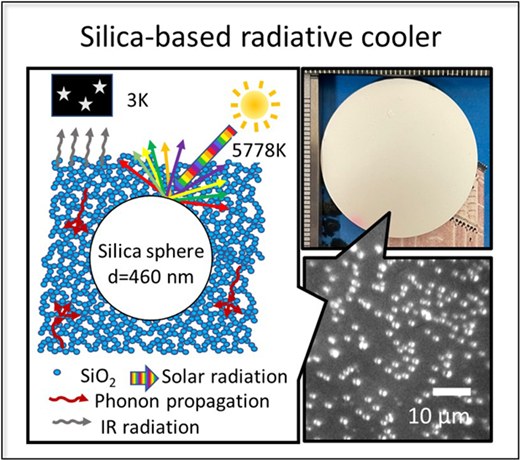
Light–matter interactions & radiation transfer
Many energy technologies depend on how light and thermal radiation travel through complex media containing particles, bubbles, droplets, cells, or pores. Examples include glass melting furnaces, photobioreactors, photoelectrochemical cells, windows, solar panels, and radiative cooling surfaces. Predicting their performance requires knowing how each inclusion absorbs and scatters radiation and how these interactions add up when inclusions are densely packed, touching, or attached to surfaces.
Since 2002, our team has developed experimental methods, theoretical models and numerical tools to predict radiation transfer in such media, and has used them to design more efficient energy and efficiency technologies. Some of this work was done in collaboration with Profs. Dominique Baillis (INSA Lyon, France), Keyong Zhu (Beihang University, China), and Aaswath Raman (UCLA).
Dependent scattering in densely packed media
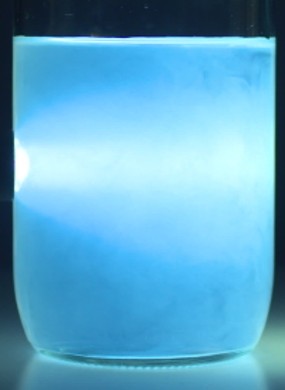
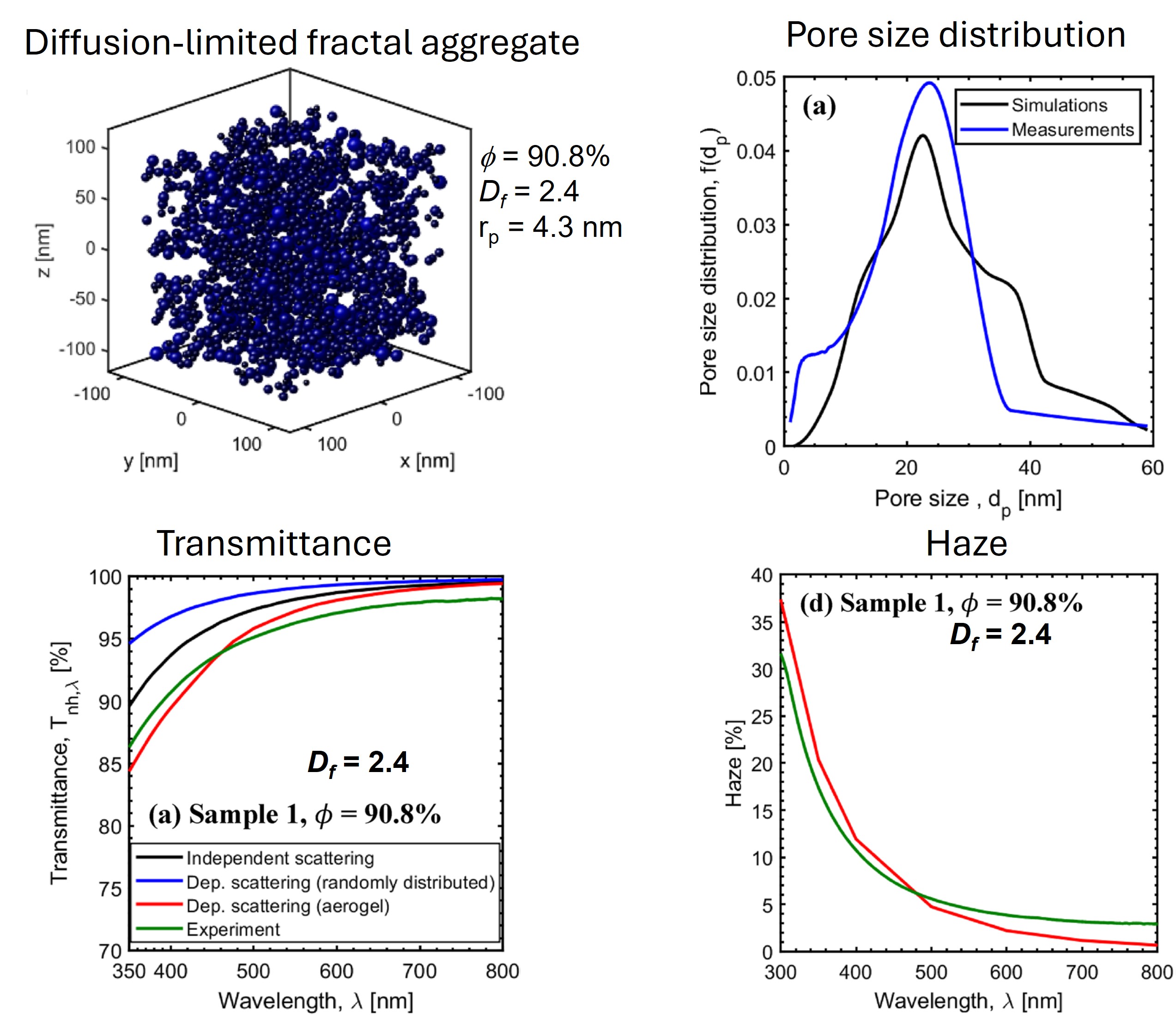
Independent scattering refers to situations when particles are sufficiently far apart that the radiation properties of a particle system can be determined by summing the contributions of individual particles. When particles are in close proximity, however, dependent scattering prevails due to near-field interactions and far-field interference among waves scattered by nearby particles. We revisited the criteria governing the transition between independent and dependent scattering regimes and expressed them in terms of ratios of particle diameter to wavelength and interparticle distance to wavelength [1]. We also examined dependent scattering in fractal aggregates composed of touching or overlapping particles [2].
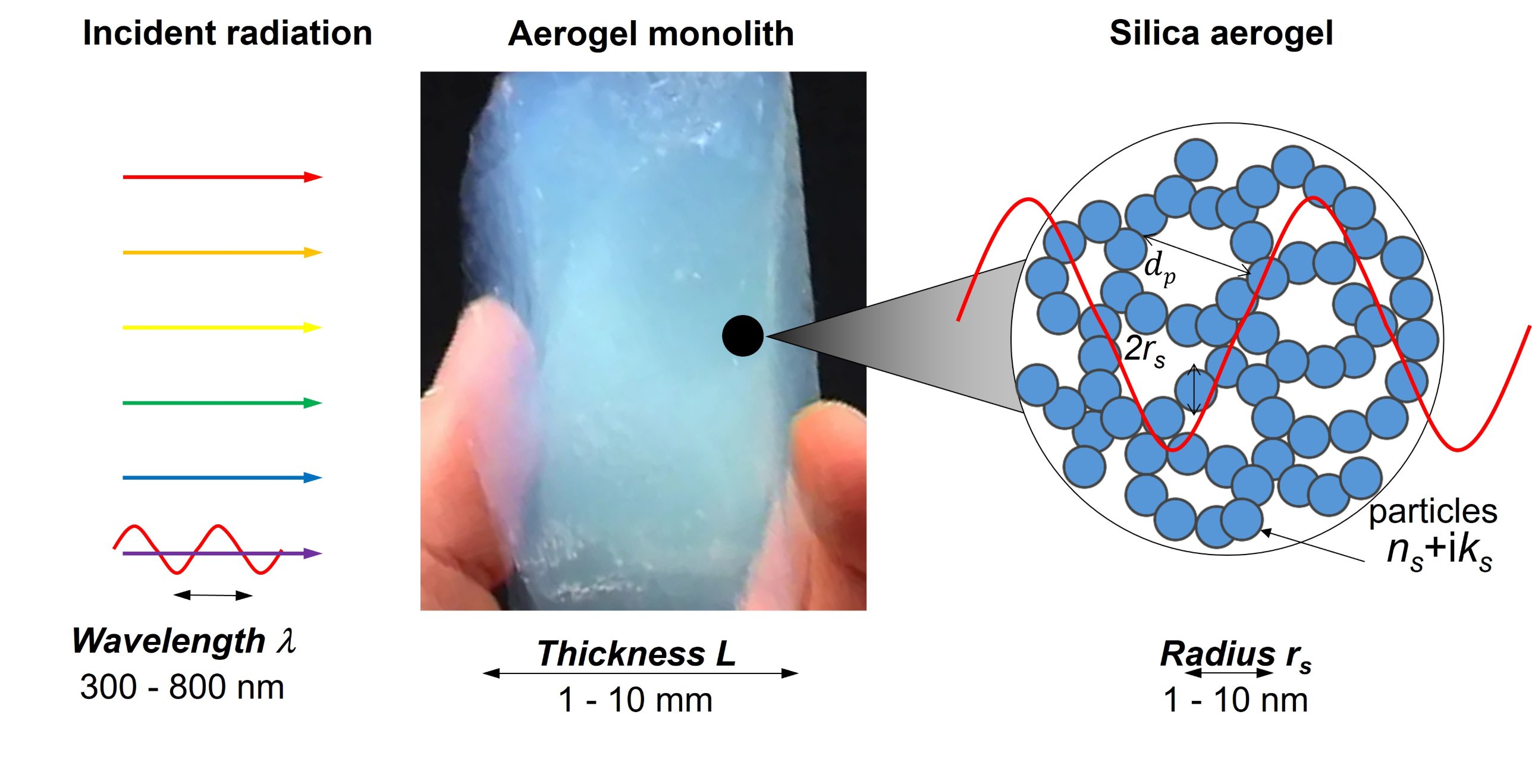
More recently, we developed rigorous methods that account for dependent scattering in thick and concentrated colloidal suspensions [3] and nanoemulsions [4]. We further demonstrated that the interplay between dependent scattering and fractal microstructure governs the optical transparency of aerogel monoliths [5].
- [1]T. Galy, D. Huang, L. Pilon, Revisiting Independent versus Dependent Scattering Regimes in Suspensions or Aggregates of Spherical Particles, Journal of Quantitative Spectroscopy and Radiative Transfer, Vol. 246, 106924 (2020).DOIPDF
- [2]T. Galy, L. Pilon, Dependent Scattering Effects in Aggregates with Touching or Overlapping Non-Absorbing Spherical Particles, Journal of Quantitative Spectroscopy and Radiative Transfer, Vol. 278, 108018 (2022).DOIPDF
- [3]R. A. Yalcin, T. Lee, N.G. Kashanchi, J. Markkanen, R. Martinez, S.H. Tolbert, and L. Pilon, Dependent Scattering in Thick and Concentrated Colloidal Suspensions, ACS Photonics, Vol. 9, pp. 3318-3332 (2022).DOIPDF
- [4]R. Martinez, A. Bhanawat, R.A. Yalçin, L. Pilon, Rigorous Accounting for Dependent Scattering in Thick and Concentrated Nanoemulsions, The Journal of Physical Chemistry C, Vol. 128, No. 15, pp. 6419-6430 (2024).DOIPDF
- [5]R.A. Yalçin, P.E. McNeil, A. Bhanawat, R. Martinez, G.N. Kashanchi, S.H. Tolbert, B.S. Dunn, L. Pilon, Dependent Scattering and Fractal Microstructure Determine the Transparency of Aerogel Monoliths, APL Photonics, Vol. 10, 046103 (2025).DOIPDF
Droplets on windows, solar panels, and radiative coolers
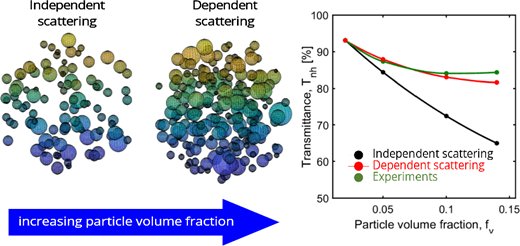
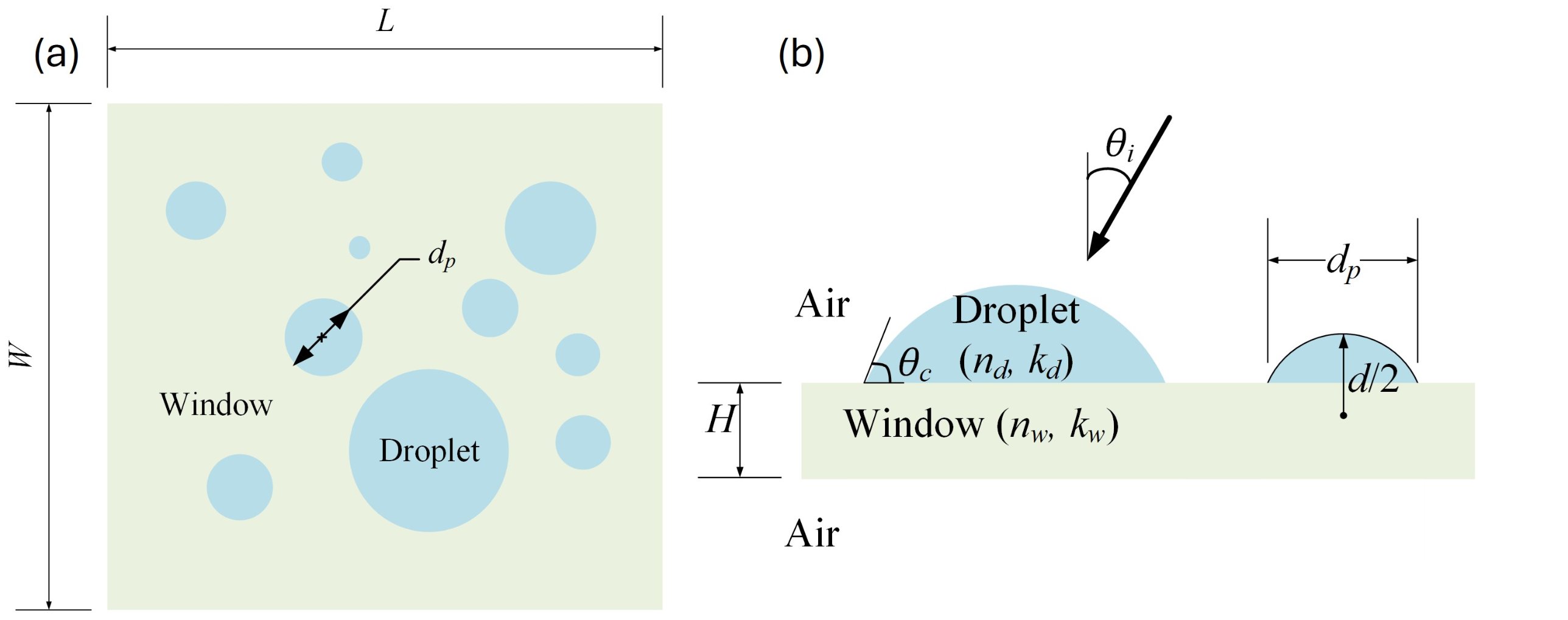
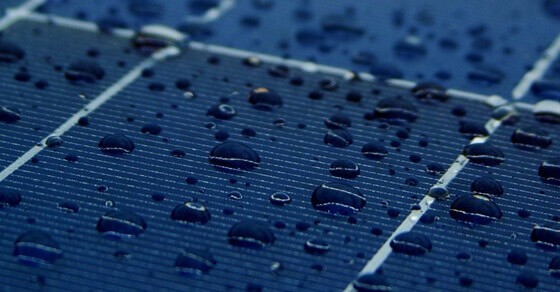
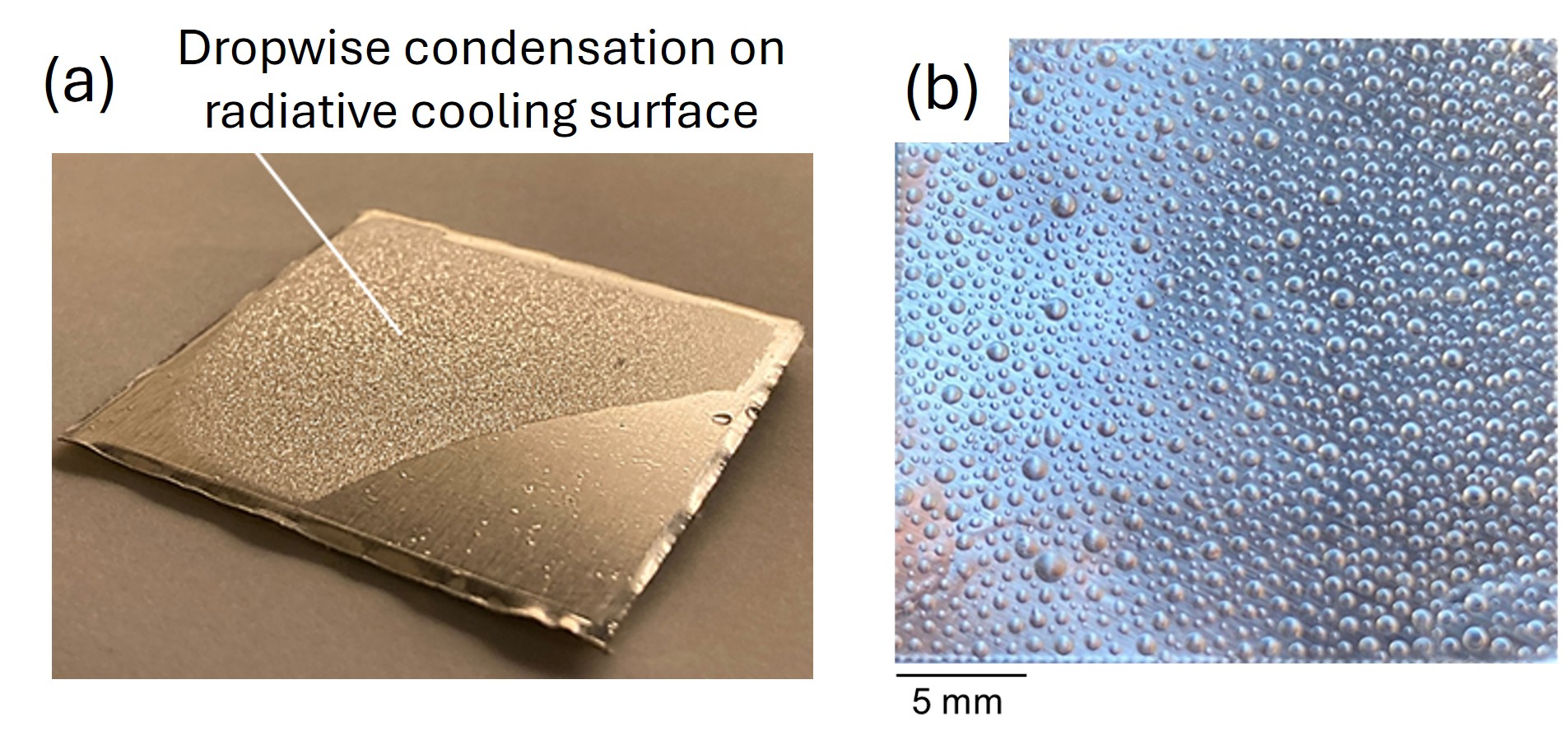
Condensation and rain form droplets on windows, photovoltaic panels, solar thermal collectors, photobioreactors, and radiative cooling surfaces, altering their optical and radiative responses. Our team conducted some of the first detailed numerical and experimental investigations of light transfer through transparent and semitransparent windows supporting cap-shaped or pendant droplets, both nonabsorbing and absorbing, on either side of the window [6–11]. We showed that the transmittance depends strongly on the droplet contact angle, with large optical losses arising from total internal reflection when the contact angle exceeds a critical value.
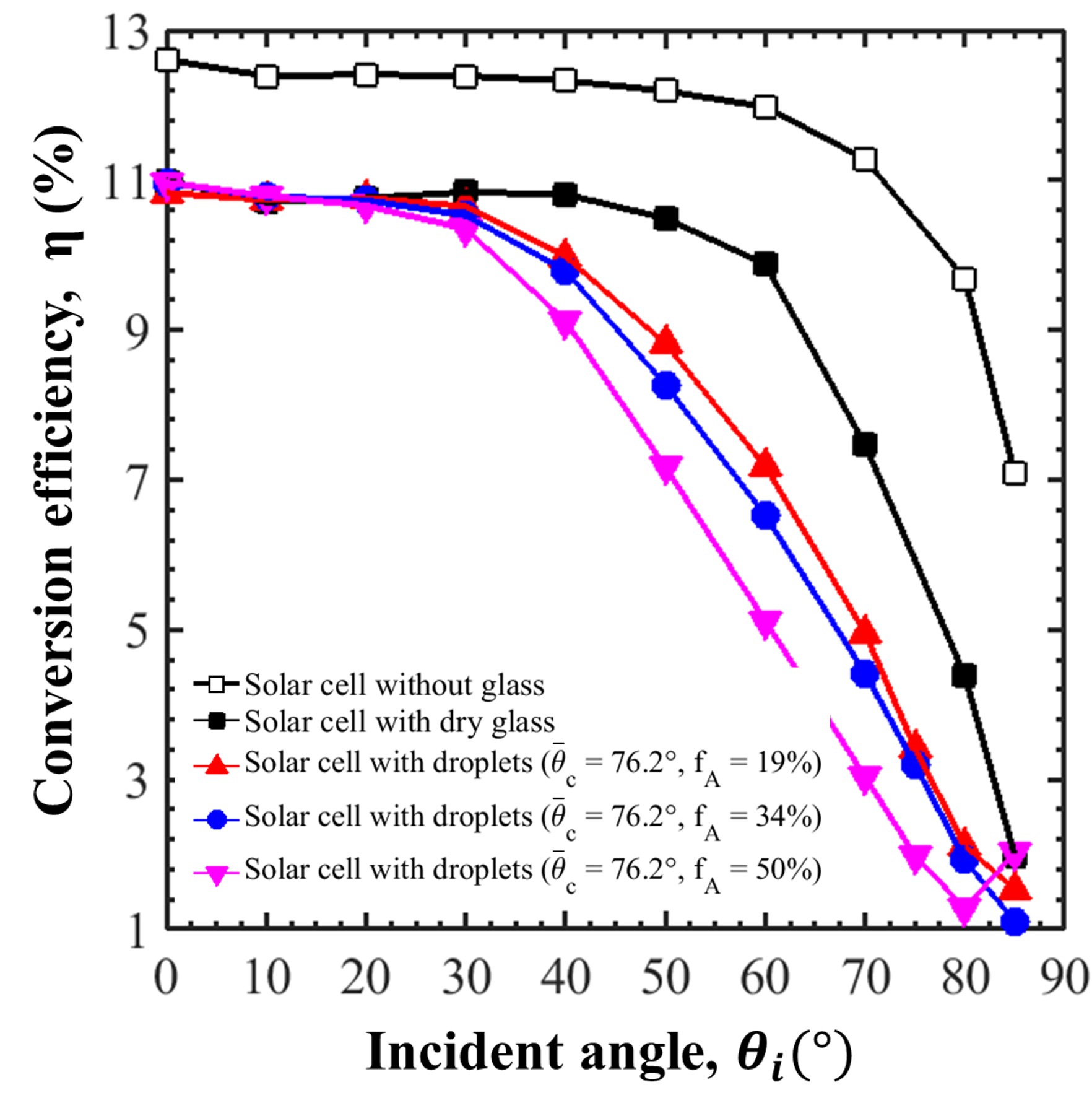
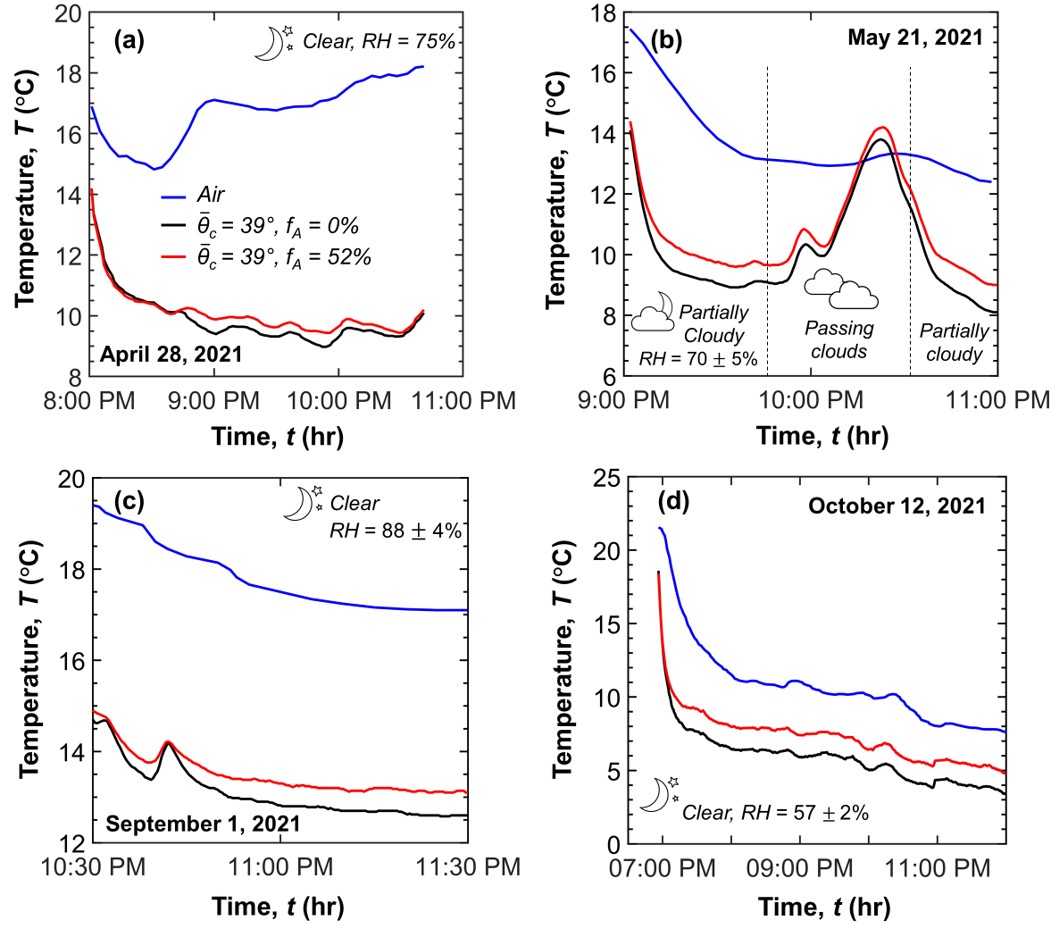
We extended this work to infrared radiation, investigating how droplets affect radiation transfer through semitransparent windows [12]. We also quantified the effects of dew and rain on photovoltaic solar cell performance [13] and demonstrated how dropwise condensation reduces selectivity of sky-facing radiative cooling surfaces [14].
- [6]K. Zhu, Y. Huang, J. Pruvost, J. Legrand, and L. Pilon, Transmittance of Transparent Windows with Non-Absorbing Cap-Shaped Droplets Condensed on Their Backside, Journal of Quantitative Spectroscopy and Radiative Transfer, Vol. 194, pp.98-107 (2017).DOIPDF
- [7]K. Zhu and L. Pilon, Transmittance of Semitransparent Windows with Absorbing Cap-Shaped Droplets Condensed on Their Backside, Journal of Quantitative Spectroscopy and Radiative Transfer, Vol. 201, pp. 53-63 (2017).DOIPDF
- [8]K. Zhu, S. Li, and L. Pilon, Light transfer through windows with external condensation, Journal of Quantitative Spectroscopy and Radiative Transfer, Vol. 208, pp. 164-171 (2018).DOIPDF
- [9]Y. Huang, C. Feng, J. Hoeniges, K. Zhu, and L. Pilon, Bidirectional Transmittance of Transparent Windows With External or Backside Condensation of Nonabsorbing Cap-Shaped Droplets, Journal of Quantitative Spectroscopy and Radiative Transfer, Vol. 251, 107039 (2020).DOIPDF
- [10]E. Simsek, K. Zhu, N. Kashanchi, M.J. Williams, T. Galy, M. Marszewski, S. H. Tolbert, L. Pilon, Light Transfer through Semi-transparent Glass Panes Supporting Pendant Droplets, Journal of Quantitative Spectroscopy and Radiative Transfer, Vol. 261, 107493 (2021).DOIPDF
- [11]J. Hoeniges, K. Zhu, W. Welch, E. Simsek, L. Pilon, Transmittance of Transparent Horizontal and Tilted Windows Supporting Large Non-Absorbing Pendant Droplets, Journal of Quantitative Spectroscopy and Radiative Transfer, Vol. 275, 107876 (2021).DOIPDF
- [12]E. Simsek, M.J. Williams, J. Hoeniges, K. Zhu, L. Pilon, Infrared Radiation Transfer through Semitransparent Windows Supporting Absorbing Droplets, International Journal of Heat and Mass Transfer, Vol. 194, 123043 (2022).DOIPDF
- [13]E. Simsek, M.J. Williams, L. Pilon, Effect of Dew and Rain on Photovoltaic Solar Cell Performances, Solar Energy Materials and Solar Cells, Vol. 222, 110908 (2021).DOIPDF
- [14]E. Simsek, J. Mandal, A.P. Raman, L. Pilon, Dropwise Condensation Reduces Selectivity of Sky-Facing Radiative Cooling Surfaces, International Journal of Heat and Mass Transfer, Vol. 198, 123399 (2022).DOIPDF
Bubbles in solar water splitting
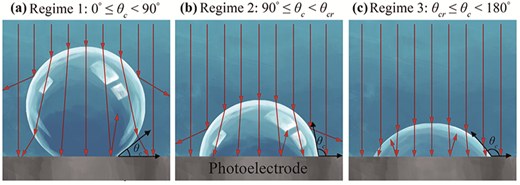
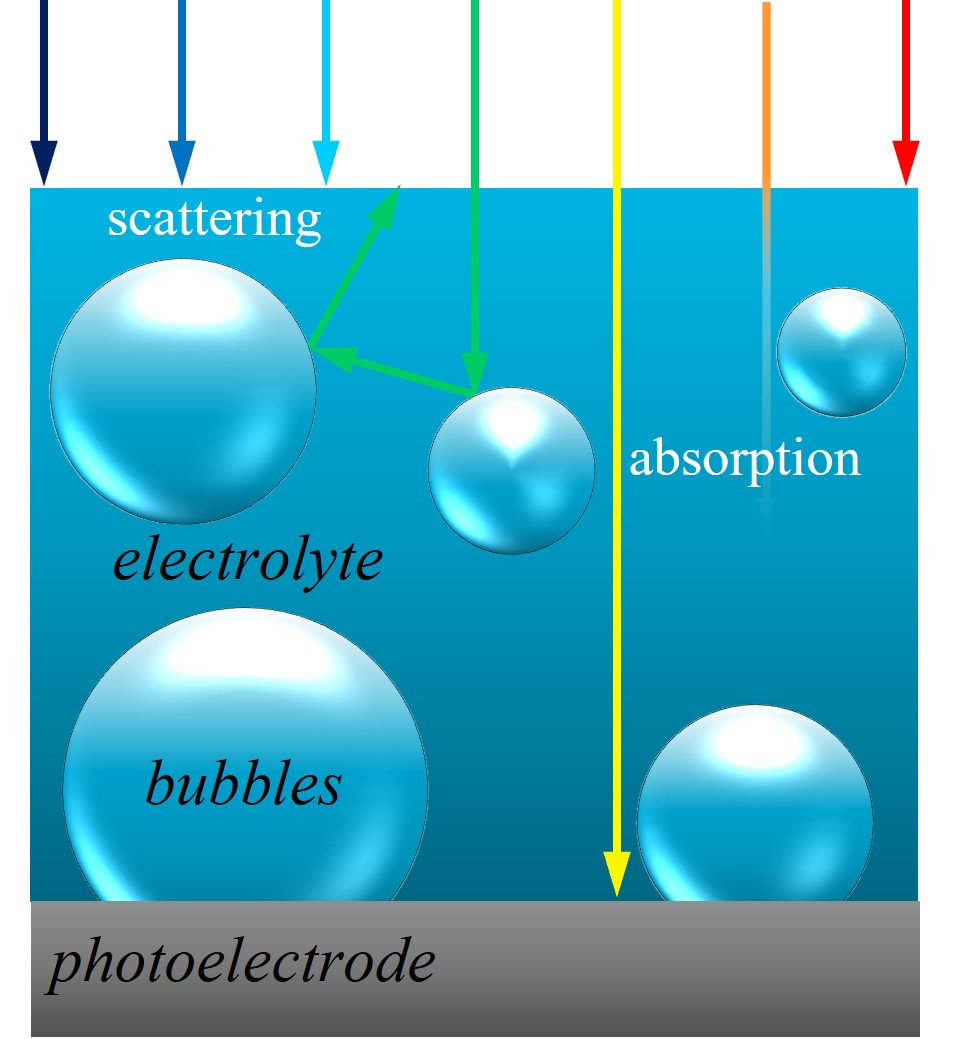
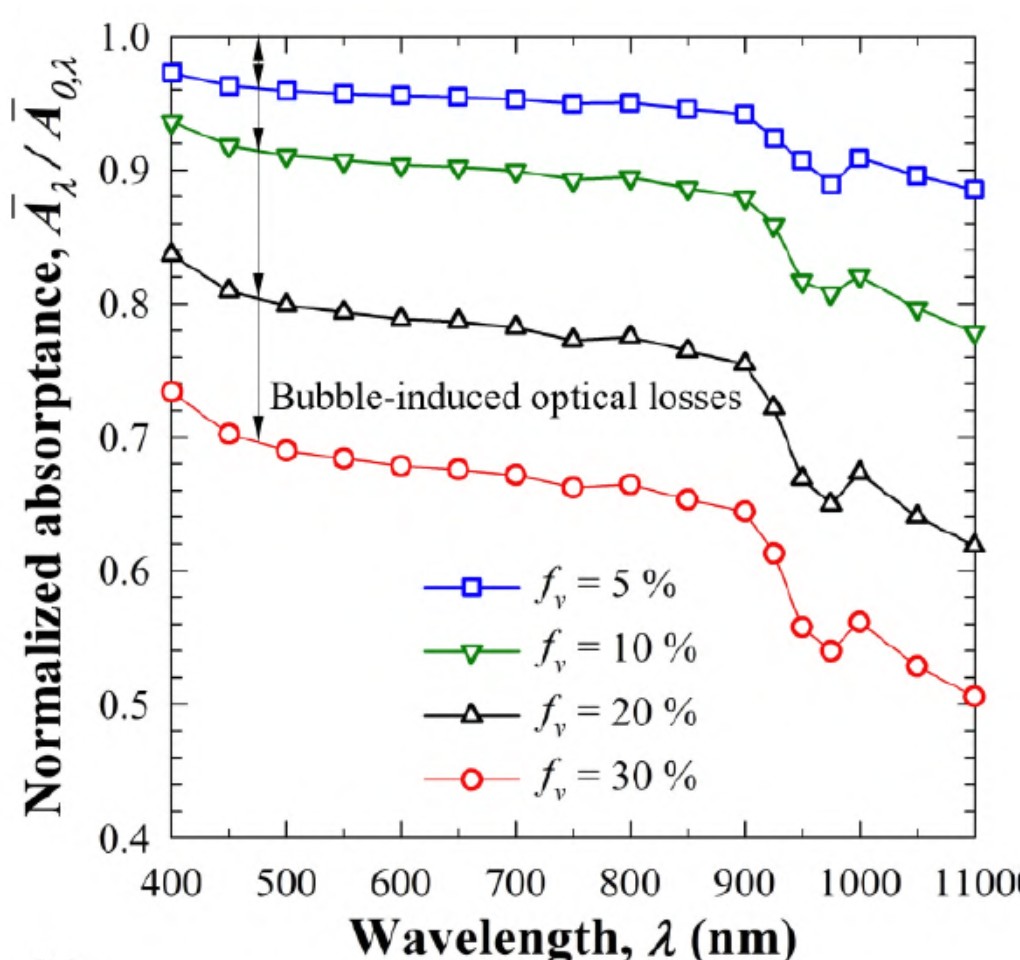
Gas bubbles generated during photoelectrochemical water splitting can significantly reduce the amount of sunlight reaching the photoelectrode, thereby limiting solar-to-hydrogen conversion efficiency. Our team developed Monte Carlo ray-tracing models to quantify optical losses caused by hydrogen and oxygen bubbles attached to photoelectrodes [15] and dispersed throughout the electrolyte [16]. We showed that these losses depend on bubble contact angle, surface coverage, bubble size, gas volume fraction, and bubble-plume thickness. In particular, total internal reflection at the electrolyte–bubble interface and multiple scattering within the bubble-filled electrolyte can substantially reduce photoelectrode absorptance. We also identified strategies to mitigate these losses, including using hydrophilic photoelectrodes or coatings, promoting larger bubble departure diameters, and reducing bubble-plume thickness through electrolyte flow.
- [15]A. Bhanawat, K. Zhu, L. Pilon, How Do Bubbles Affect Light Absorption in Photoelectrodes for Solar Water Splitting?, Sustainable Energy & Fuels, Vol. 6, pp. 910 - 924 (2022).DOIPDF
- [16]A. Bhanawat, L. Pilon, Light Transfer Through Bubble-Filled Electrolyte For Solar Water Splitting, Sustainable Energy & Fuels, Vol. 7, pp. 448-460 (2023).DOIPDF
Radiative cooling materials
Under clear skies, the Earth’s atmosphere is largely transparent to infrared radiation with wavelengths between 8 and 13 μm. Thus, a surface that emits strongly in this spectral range can radiate heat directly to outer space and cool below the ambient air temperature without any energy input. Achieving this passive radiative cooling during the day is more challenging, because the surface must also reflect the incident sunlight while minimizing heat gain from its warmer surroundings. Building on our transparent and insulating mesoporous silica, we developed a thermally insulating passive daytime radiative cooler made of hierarchical silica aerogels that back-scatters sunlight, emits strongly in the atmospheric transparency window, and limits parasitic heat gain [17]. We also designed mesoporous organosilica infrared metamaterials for the radiative cooling of windows, which must remain transparent to visible light [18].
- [17]S. E. Ju, R. Martinez, G. N. Kashanchi, A. Bhanawat, R. A. Yalçin, J. Drévillon, L. Pilon, S. H. Tolbert, Development of a Thermally Insulating Passive Daytime Radiative Cooler Using Hierarchical Silica Aerogels, ACS Applied Energy Materials, Vol. 9, No. 14, pp. 9209-9222 (2026).DOIPDF
- [18]A. Zaveri, S. E. Ju, A. Tuokkola, R. McAlpine, R. Martinez, J. Kim, S. Furuya, L. Pilon, B. Dunn, S. H. Tolbert, A. P. Raman, Mesoporous Organosilica-Based Infrared Metamaterials for Radiative Cooling of Windows, Small, e75152 (2026).DOIPDF