Energy-efficient buildings & infrastructure
Buildings consume 40% of the energy used in the United States, primarily driven by heating and cooling demands. Compounding this challenge, global cement production accounts for 8% of all CO₂ emissions. Decarbonizing the built environment therefore demands a dual approach: engineering advanced building materials that dramatically improve energy efficiency while pioneering low-carbon manufacturing pathways.
Since 2013, our team has combined heat transfer, solid mechanics, and materials chemistry to engineer these essential solutions. In close partnership with Prof. Gaurav Sant at UCLA, our collaborative research has developed high-performance concrete composites containing phase change materials, as well as innovative, low-carbon synthesis routes that transform industrial waste into sustainable binders. Notably, parallel efforts contributed to the CarbonBuilt technology that won the grand prize in the global $7.5 million NRG COSIA Carbon XPRIZE competition in 2021.
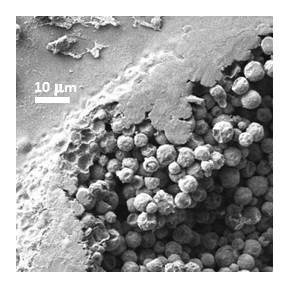
Phase change material–concrete composites for building envelopes
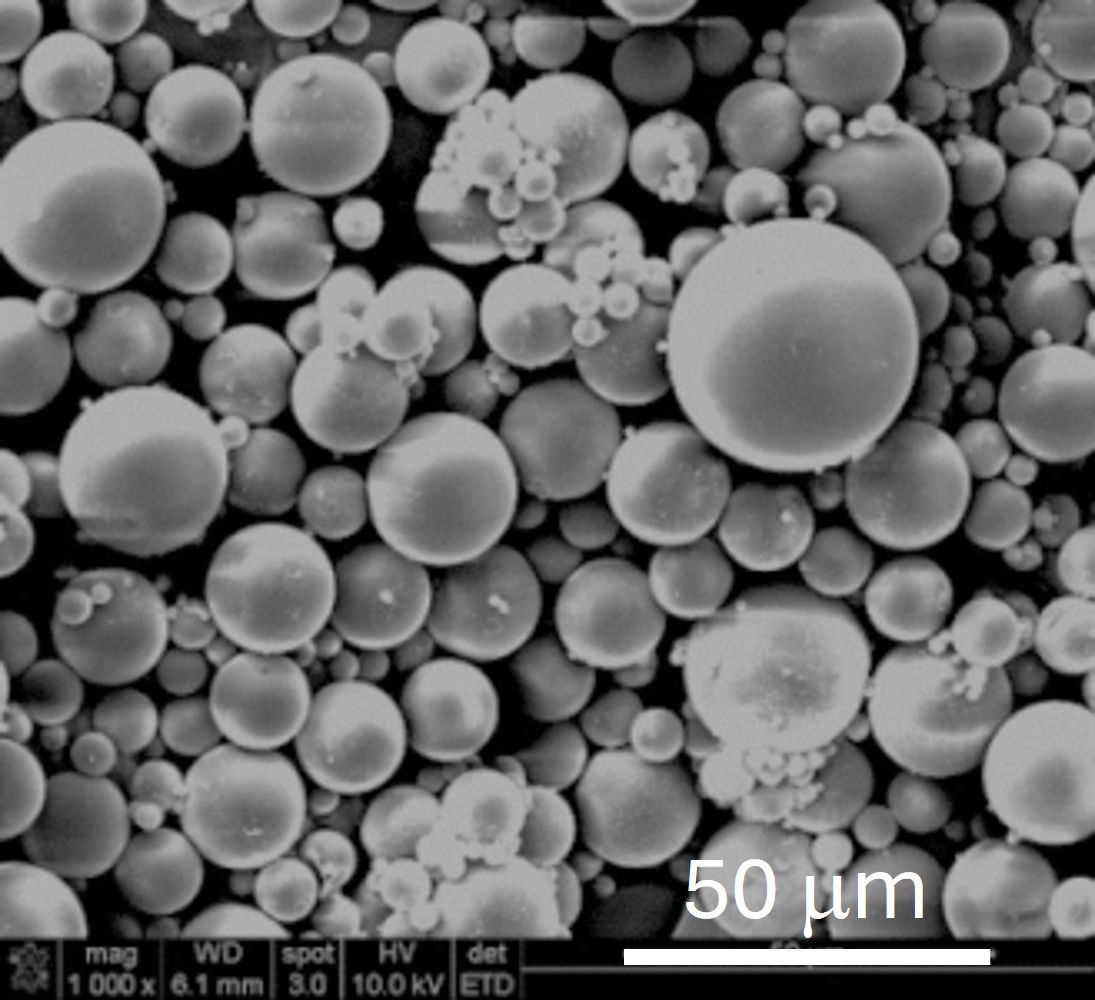
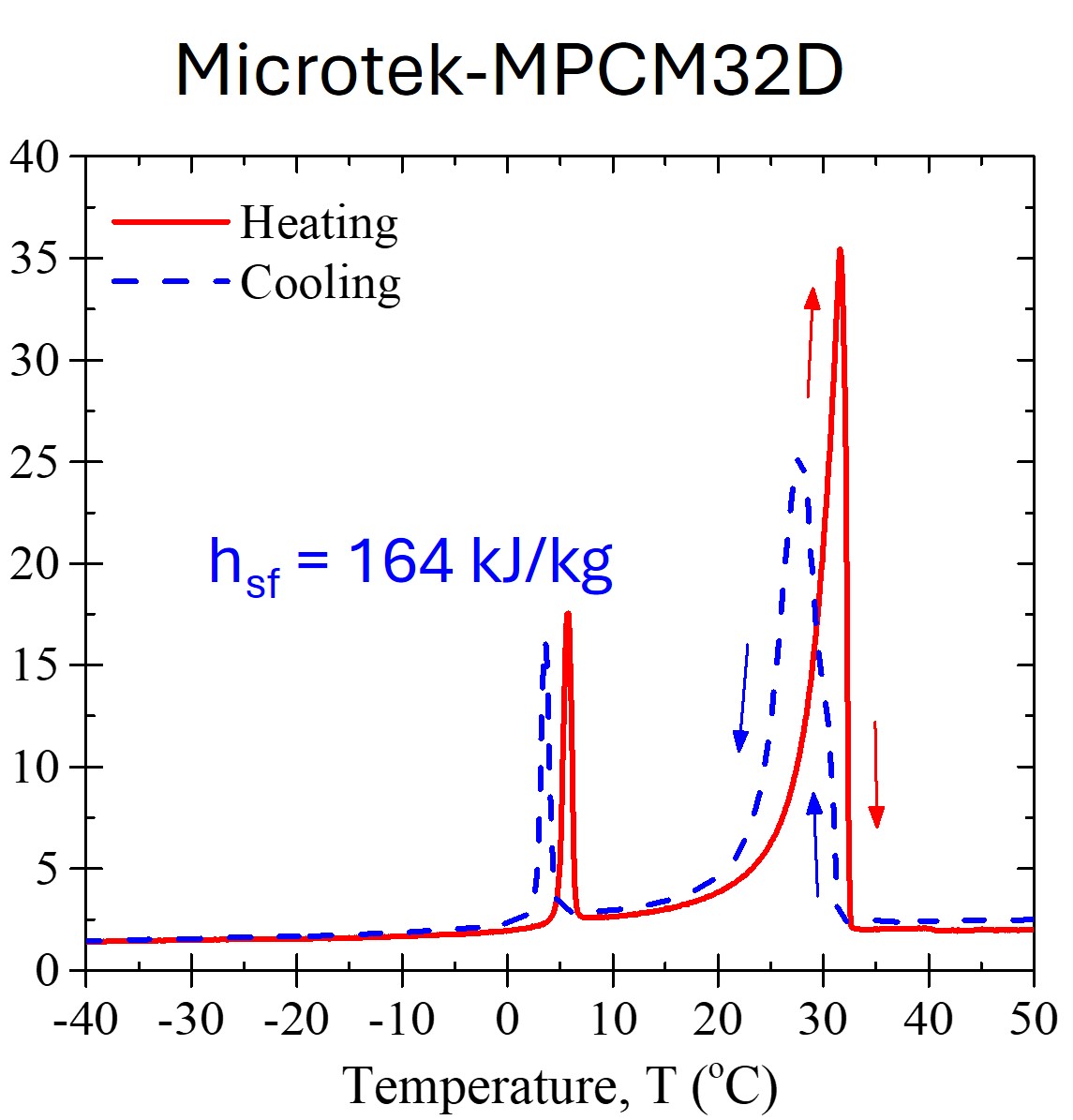
Concrete has a large thermal mass but stores relatively little heat within the narrow range of comfortable indoor temperatures. Adding microencapsulated phase change materials (PCMs) that melt and solidify near room temperature increases its ability to store and release heat, dampening indoor temperature swings. However, soft PCM capsules can reduce the structural strength and durability of concrete.
To overcome these challenges, our team has taken a comprehensive, multi-scale approach to engineering PCM-cementitious composites:
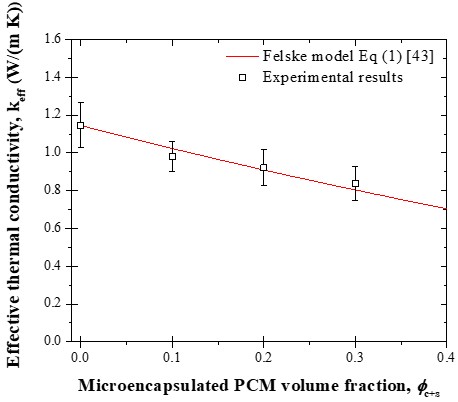
- Thermal Characterization: We developed models for the effective thermal conductivity of composites containing core–shell capsules, validated them experimentally [1, 2], and defined a new figure of merit to evaluate PCM composite thermal performance [3].
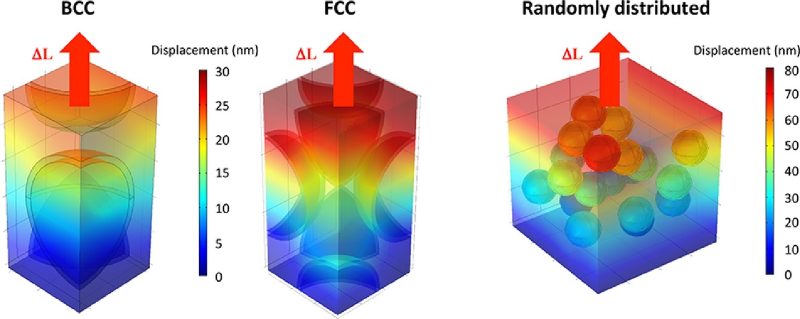
- Mechanical & Structural Integrity: We derived the effective elastic moduli of core–shell–matrix composites [4] and quantified how soft and stiff inclusions affect mechanical properties [5]. We also developed a general method to retrieve the thermal deformation properties of embedded microcapsules [6].
- Durability & Performance: Our work evaluated the durability of these composites, proving that their resistance to restrained shrinkage cracking is controlled by the cement paste. Additionally, we examined how PCMs can reduce early-age temperature spikes in concrete pavements to prevent hydration-induced thermal cracking [7, 8].
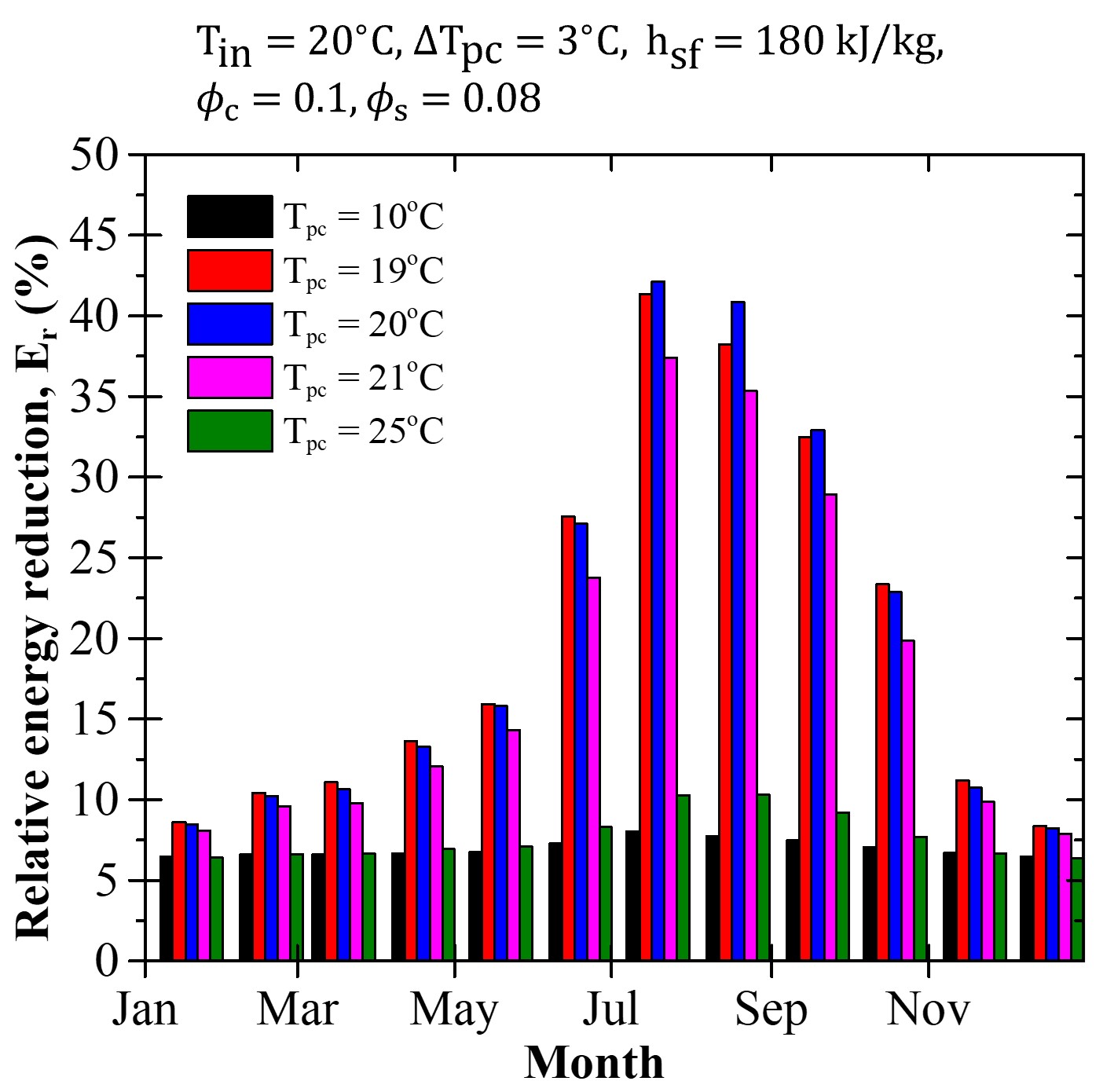
Finally, we simulated the diurnal and annual thermal performance of PCM–concrete walls across different climates [9], validating our predictions with reduced-scale building experiments [10]. In Southern California climates, PCM–concrete walls reduced annual cooling loads by more than half—showing the largest benefits when the phase change temperature closely matched the desired indoor temperature [9].
- [1]A.M. Thiele, A. Kumar, G. Sant, and L. Pilon, Effective Thermal Conductivity of Three-Component Composites Containing Spherical Capsules, International Journal of Heat and Mass Transfer, Vol. 73, pp. 177–185 (2014).DOIPDFExplainer
- [2]A. Ricklefs, A.M. Thiele, G. Falzone, G. Sant, and L. Pilon, Thermal Conductivity of Cementitious Composites Containing Microencapsulated Phase Change Materials, International Journal of Heat and Mass Transfer, Vol. 104, pp. 71-82 (2017).DOIPDF
- [3]A.M. Thiele, Z. Wei, G. Falzone, B. Young, N. Neithalath, G. Sant, and L. Pilon, Figure of Merit for the Thermal Performance of Cementitious Composites containing Phase Change Materials, Cement and Concrete Composites, Vol. 65, pp. 214-226 (2016).DOIPDF
- [4]B. Young, A. Fujii, A. Thiele, A. Kumar, G. Sant, E. Taciroglu, and L. Pilon, Effective Elastic Moduli of Core-Shell-Matrix Composites, Mechanics of Materials, Vol. 92, pp. 94-106 (2016).DOIPDFExplainer
- [5]G. Falzone, G. Puerta Falla, Z. Wei, M. Zhao, A. Kumar, M. Bauchy, N. Neithalath, L. Pilon, and G. Sant, The Influences of Soft and Stiff Inclusions on the Mechanical Properties of Cementitious Composites, Cement and Concrete Composites, Vol. 71, pp. 153-165 (2016).DOIPDF
- [6]B.A. Young, Z. Wei, J. Rubalcava-Cruz, G. Falzone, A. Kumar, N. Neithalath, G. Sant, and L. Pilon, A General Method for Retrieving Thermal Deformation Properties of Microencapsulated Phase Change Materials or Other Particulate Inclusions in Cementitious Composites, Materials & Design, Vol. 126, pp. 259-267 (2017).DOIPDF
- [7]B.A. Young, G. Falzone, Z. She, A.M. Thiele, Z. Wei, N. Neithalath, G. Sant, and L. Pilon, Early-Age Temperature Evolutions in Concrete Pavements Containing Microencapsulated Phase Change Materials, Construction & Building Materials, Vol. 147, pp. 466–477 (2017).DOIPDF
- [8]Z. She, Z. Wei, B.A. Young, G. Falzone, N. Neithalath, G. Sant, and L. Pilon, Examining the Effects of Microencapsulated Phase Change Materials on Early-Age Temperature Evolutions in Realistic Pavement Geometries, Cement and Concrete Composites, Vol. 103, pp. 149-159 (2019).DOIPDF
- [9]A.M. Thiele, A. Jamet, G. Sant, and L. Pilon, Annual Energy Analysis of Concrete Containing Phase Change Materials for Building Envelopes, Energy Conversion and Management, Vol. 103, pp. 374-386 (2015).DOIPDFExplainer
- [10]B.-A. Young, G. Falzone, Z. Wei, G. Sant, and L. Pilon, Reduced-Scale Experiments to Evaluate Performance of Composite Building Envelopes Containing Phase Change Materials, Construction and Building Materials, Vol. 162, pp. 584-595 (2018).DOIPDF
Low-carbon cementitious materials and CO₂ mineralization
Most of the CO₂ emitted by cement and lime production comes from heating limestone at high temperature. Our research addresses this challenge by turning alkaline industrial wastes into valuable feedstocks for low-carbon cementitious materials and CO₂ mineralization.
Key Milestones & Capabilities:
- Clinkering-Free Cementation: We pioneered methods demonstrating that fly ash can be successfully cemented through carbonation without the need for traditional clinkering [11].
- Calcination-Free Production: Our team developed a novel process to produce calcium hydroxide by extracting calcium from steel slag. By precipitating it at sub-boiling temperatures using low-grade waste heat, this method achieves at least 65% lower CO₂ emissions than conventional lime production [12].
- Scale & Siting: We have successfully demonstrated this process at a pilot scale [13], analyzed its upscaling potential and geospatial siting across the United States [14], and identified the intrinsic factors controlling calcium extraction kinetics from crystalline slags [15].
- [11]Z. Wei, B. Wang, G. Falzone, E. Callagon La Plante, M.U. Okoronkwo, Z. She, T. Oey, M. Balonis, N. Neithalath, L. Pilon, G. Sant, Clinkering-Free Cementation by Fly Ash Carbonation, Journal of CO2 Utilization, Vol. 23, pp. 117-127 (2018).DOIPDF
- [12]S. Vallejo Castaño, E. Callagon La Plante, S. Shimoda, B. Wang, N. Neithalath, G. Sant, L. Pilon, Calcination-Free Production of Calcium Hydroxide at Sub-Boiling Temperatures, RSC Advances, Vol. 11, No.3, pp. 1762-1772 (2021).DOIPDF
- [13]S. Vallejo Castaño, E. Callagon La Plante, M. Collin, G. Sant, L. Pilon, A Pilot-Process for Calcium Hydroxide Production From Iron Slag By Low-Temperature Precipitation, Journal of Environmental Chemical Engineering, Vol. 10, No. 3, 107792 (2022).DOIPDF
- [14]S. Vallejo Castaño, E. Callagon La Plante, L. Pilon, G. Sant, Analyzing the Upscaling Potential and Geospatial Siting of Calcination-Free Calcium Hydroxide Production in the United States, Heliyon, Vol. 10, No. 12, e32426 (2024).DOIPDF
- [15]E. La Plante, A. Leão, M. Bob, Y.-H. Hsiao, O. Daily, G. Le Saout, L. Pilon, G. N. Sant, Intrinsic controls on the kinetics of calcium extraction from crystalline slags: Implications on CO2 mineralization, Resources, Conservation & Recycling, Vol. 229, 108846 (2026).DOIPDF